
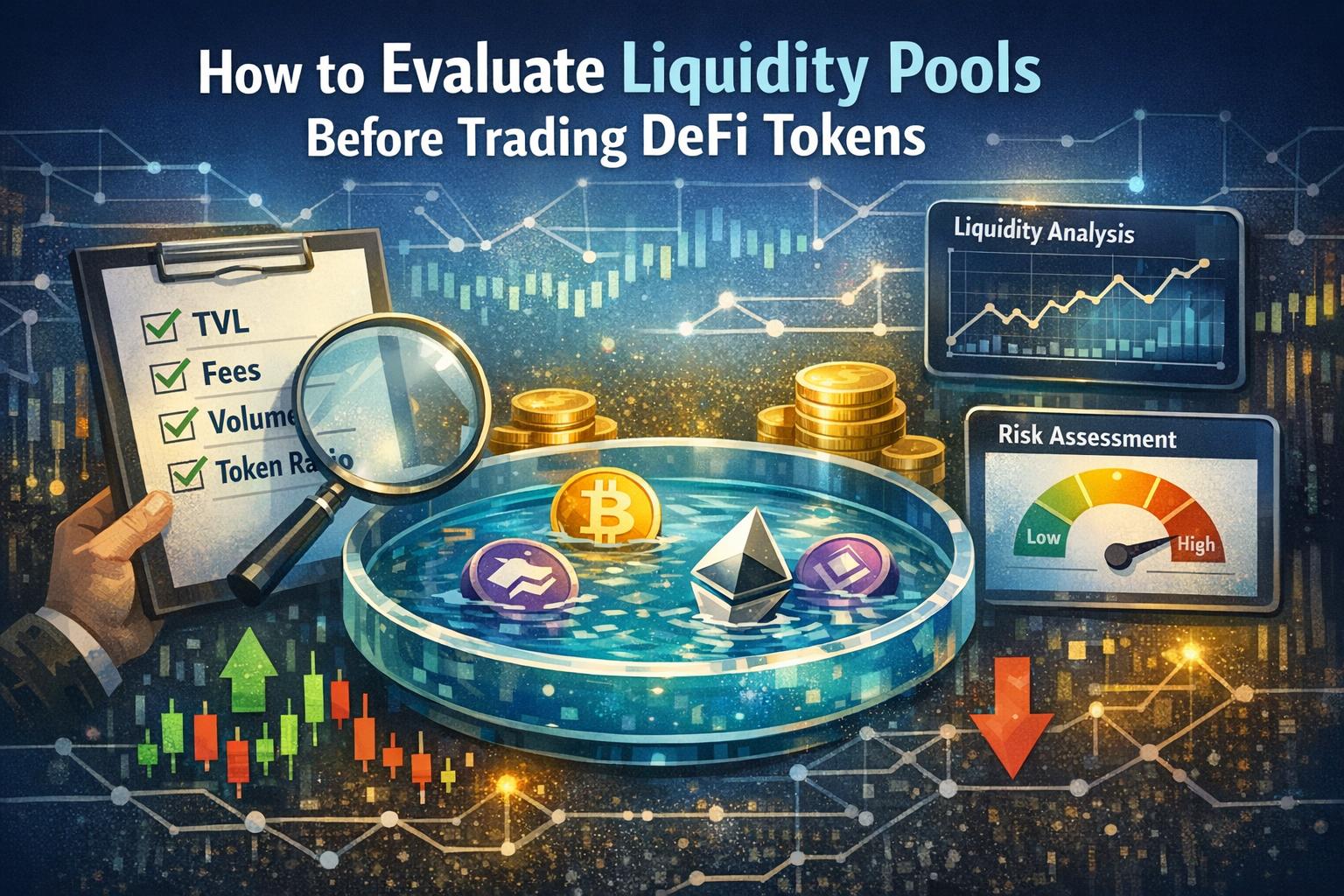
Understanding Liquidity Pools in DeFi
Decentralized finance, commonly known as DeFi, is built on the premise of replacing centralized financial intermediaries with automated protocols deployed on blockchain networks. Within this ecosystem, liquidity pools form a foundational component. They enable users to trade digital assets directly through smart contracts instead of relying on a centralized exchange with an order book and matching engine. By depositing tokens into shared pools of capital, participants collectively facilitate trading while earning a portion of the fees generated by transactions.
Liquidity pools are most commonly associated with decentralized exchanges (DEXs) that operate using automated market maker (AMM) models. In these systems, pricing is determined algorithmically rather than through bids and asks. Users interact with a smart contract that calculates exchange rates based on the ratio of tokens held within the pool. This framework supports continuous liquidity, provided assets remain locked in the contract.
However, participation in liquidity pools involves more than depositing assets and collecting returns. The structure of each pool, the tokens involved, and the underlying protocol design all influence risk and reward profiles. Careful evaluation is necessary before trading tokens or providing liquidity in DeFi markets.
Core Mechanics of Liquidity Pools
Liquidity pools typically consist of two or more tokens locked in a smart contract. In a standard two-asset AMM pool, liquidity providers deposit equal values of each token. For example, a pool could consist of Token A and Token B in equal proportions based on their current market price. Traders interact with the pool by swapping one token for another. The AMM algorithm automatically recalculates the price after each trade, maintaining a mathematical relationship between the token reserves.
The most traditional formula used in AMMs is the constant product model, expressed as x multiplied by y equals k. In this formulation, x and y represent the quantities of the two tokens in the pool, while k remains constant. When a trade changes the reserve of one token, the algorithm adjusts the amount of the other token accordingly, ensuring that the product remains the same.
Liquidity providers receive pool tokens representing their proportional share of the pool. As trading activity generates fees, these fees are added to the pool’s reserves. When providers withdraw their liquidity, they redeem their pool tokens for a proportional share of the updated reserves, including accumulated fees.
While the model appears straightforward, underlying variables such as market volatility, token correlation, and liquidity depth can significantly affect outcomes. Evaluating liquidity pools therefore requires understanding both quantitative metrics and structural risks.
Key Metrics to Consider
Total Value Locked (TVL)
Total Value Locked (TVL) refers to the cumulative value of assets deposited within a liquidity pool or across a broader DeFi protocol. It provides a snapshot of capital commitment and can serve as an indicator of user confidence and adoption. A higher TVL often reflects greater usage and liquidity depth, which may reduce price slippage for traders.
However, TVL should not be interpreted in isolation. Large pools may still contain volatile or correlated assets that expose providers to risk. Additionally, TVL can fluctuate quickly in response to market conditions. A sudden decline may indicate capital migration to more attractive opportunities, shifts in incentive programs, or concerns about platform stability.
When evaluating TVL, it is important to consider not only absolute numbers but also trends over time. Consistent growth or relative stability during periods of market stress may signal resilience, whereas abrupt spikes driven solely by short-term incentives may not indicate long-term sustainability.
Pool Volume and Liquidity
Trading volume measures the total value of transactions processed by a pool over a defined period, such as 24 hours or 30 days. High trading volume is generally beneficial for liquidity providers because it correlates with increased fee generation. Pools with steady activity can produce more predictable returns from fee distribution.
Liquidity depth, which reflects the total capital available for swaps, directly affects slippage. Slippage occurs when the executed price of a trade deviates from the expected price due to insufficient liquidity. Larger pools are typically more capable of absorbing sizable trades without materially affecting price.
The relationship between volume and liquidity also determines capital efficiency. A pool with moderate TVL but high trading volume relative to its size may provide better fee generation per unit of capital than a large pool with limited activity. Evaluating the ratio of volume to liquidity can therefore offer insights into pool utilization.
Price Impact and Slippage
Price impact is the change in token price caused by executing a particular trade within a pool. In AMM systems, larger trades proportionally alter token balances more substantially, resulting in greater price shifts. For traders, lower price impact is generally desirable. For liquidity providers, frequent smaller trades can generate fees with minimal volatility disruption, whereas large trades can shift pool balances and alter exposure.
Slippage tolerance settings on decentralized exchanges allow traders to manage execution risk. Persistent high slippage within a pool may deter traders, leading to reduced volume over time. Evaluating historical slippage metrics provides insight into how well the pool handles market activity.
Impermanent Loss
Impermanent loss represents a fundamental consideration for liquidity providers. It occurs when the relative price of deposited tokens diverges from their price at the time of deposit. As the AMM algorithm rebalances token quantities in response to trades, providers may end up holding different proportions of assets compared to simply holding them in a wallet.
If prices return to their original ratio before withdrawal, the effect may diminish. However, when price divergence persists, the loss becomes realized upon withdrawal. Impermanent loss is especially pronounced in pools containing volatile or weakly correlated assets.
Stablecoin pairs or highly correlated token pairs generally experience lower impermanent loss than pools composed of unrelated or speculative assets. Before participating, providers should evaluate the historical volatility and correlation between assets. Estimating potential impermanent loss under various price scenarios can provide a clearer picture of risk exposure.
Fee Structure and Revenue Distribution
Each liquidity pool operates under a defined fee structure, typically charging traders a percentage of the trade value. The fee level may vary depending on the platform and token pair. Some protocols offer multiple fee tiers to accommodate different volatility profiles.
Liquidity providers receive a share of collected fees proportional to their ownership of the pool. Evaluating average daily fee generation relative to deposited capital helps estimate projected returns. However, projected yields based on recent activity may not persist if trading volume declines.
Additionally, some platforms incorporate external reward incentives, such as governance tokens distributed to liquidity providers. These incentives can temporarily elevate yields but may decline as distribution schedules change or token prices fluctuate.
Smart Contract Architecture and Security
Smart Contract Risks
Liquidity pools are governed by smart contracts, which automate deposit, withdrawal, and trade execution processes. While smart contracts eliminate reliance on centralized intermediaries, they introduce technical risks. Bugs, logic errors, and vulnerabilities can expose funds to theft or unintended loss.
Assessing whether a protocol has undergone independent security audits is an essential step in due diligence. Reputable auditing firms evaluate code for structural weaknesses, reentrancy attacks, overflow conditions, and other vulnerabilities. While audits do not guarantee absolute safety, they reduce the likelihood of undiscovered flaws.
Beyond audits, reviewing the protocol’s history can provide insight into operational resilience. Protocols that have operated for extended periods without major security incidents may demonstrate stronger design and oversight practices.
Upgradability and Governance
Some DeFi protocols utilize upgradeable contracts governed by administrative keys or decentralized governance mechanisms. While upgradeability enables improvements and rapid bug fixes, it also introduces potential risk if governance is concentrated or poorly structured.
Examining how governance decisions are made, who controls administrative privileges, and how changes are communicated helps evaluate transparency and decentralization. Protocols with clearly documented governance frameworks often provide greater operational clarity.
Market and Token Considerations
Volatility and Correlation
Token volatility significantly affects liquidity pool performance. Highly volatile assets can generate increased trading activity, potentially raising fee income. However, they also amplify impermanent loss risk. Evaluating historical volatility data and correlation between token pairs offers a more complete understanding of expected outcomes.
Pools consisting of stablecoins or pegged assets aim to maintain close price alignment. These pools tend to experience limited price divergence, reducing impermanent loss while still generating fees from arbitrage and stable-value trades.
Token Fundamentals
Beyond price movements, the underlying economics of the tokens themselves should be examined. Factors such as token supply schedules, inflation rates, governance utility, and network adoption influence long-term viability. Participating in a pool that includes a weak or declining asset can increase exposure to depreciation risk.
Token audits, project development updates, and transparent communication from development teams contribute to assessing asset credibility. While liquidity pools facilitate trading mechanics, the value proposition of each token remains central to overall performance.
Evaluating Risks and Rewards
Liquidity pool participation combines elements of trading, passive income generation, and exposure to protocol risk. Balancing these components requires structured evaluation.
Annual Percentage Yield (APY)
The annual percentage yield (APY) is commonly displayed as an estimate of returns from fees and incentives. APY calculations may incorporate compounding assumptions and short-term performance data. High published APYs can attract liquidity rapidly, but they may decline as more capital enters the pool and dilutes fee distribution among participants.
Comparing APY against historical averages and considering whether returns derive primarily from trading fees or external token incentives can clarify sustainability. Yields driven predominantly by temporary reward programs may decrease once incentives end.
Platform Reputation
The broader reputation of the decentralized exchange or protocol hosting the pool influences reliability. Indicators include transparency of development activity, responsiveness to user concerns, clear documentation, and public governance procedures. Community engagement, incident response history, and openness about risks contribute to informed evaluation.
While decentralized platforms do not function like traditional companies, their public track record and technical transparency provide measurable indicators of operational discipline.
Regulatory Considerations
Regulatory environments surrounding digital assets continue to evolve. Although liquidity pools operate through decentralized smart contracts, participants should remain aware of potential legal and compliance implications in their jurisdiction. Regulatory developments could influence token availability, platform accessibility, or reporting obligations.
Understanding these considerations reduces exposure to unforeseen constraints or limitations.
Diversifying Across Pools
Diversification is a widely recognized approach to risk management. Allocating capital across multiple liquidity pools can reduce exposure to any single token pair, smart contract, or incentive program. Diversification also enables participation in pools with varying volatility profiles, fee tiers, and reward structures.
Strategic diversification may involve combining stablecoin pools for lower volatility exposure with select correlated asset pools that offer higher trading volume. Adjusting allocation percentages according to risk tolerance and market conditions can help maintain balanced exposure.
Regular monitoring of pool performance and market developments supports timely reallocation if conditions change. DeFi markets operate continuously, and shifts in liquidity incentives or token prices can alter risk-return dynamics quickly.
Operational Best Practices
Engaging with liquidity pools requires technical competence in managing digital wallets, interacting with smart contracts, and safeguarding private keys. Security practices such as using hardware wallets, verifying contract addresses, and avoiding unverified interfaces reduce exposure to phishing or fraudulent schemes.
Transaction costs, including blockchain network fees, also affect net returns. On congested networks, high gas fees may offset earnings from smaller capital allocations. Evaluating expected transaction costs before depositing or withdrawing liquidity is therefore prudent.
Maintaining detailed records of transactions assists with portfolio tracking and regulatory compliance where applicable. Automated portfolio tools may facilitate monitoring of performance metrics and asset allocation changes over time.
Conclusion
Liquidity pools serve as a structural foundation for decentralized finance, enabling continuous token trading without centralized intermediaries. Their operation through automated market makers and smart contracts introduces both efficiency and complexity. Careful evaluation of metrics such as Total Value Locked, trading volume, liquidity depth, and fee generation provides insight into potential performance. Equally important is understanding impermanent loss, asset volatility, and smart contract risk.
Assessing protocol governance, platform reputation, and token fundamentals strengthens due diligence. Yield projections should be interpreted cautiously, particularly when based on short-term incentive programs. Diversification across pools, coupled with sound operational security practices, can mitigate concentrated risk exposure.
Informed participation requires ongoing monitoring and disciplined analysis rather than reliance on headline yield figures or short-term trends. By systematically examining quantitative indicators and structural safeguards, traders and liquidity providers can make decisions aligned with their risk tolerance and long-term objectives within the evolving DeFi ecosystem.