
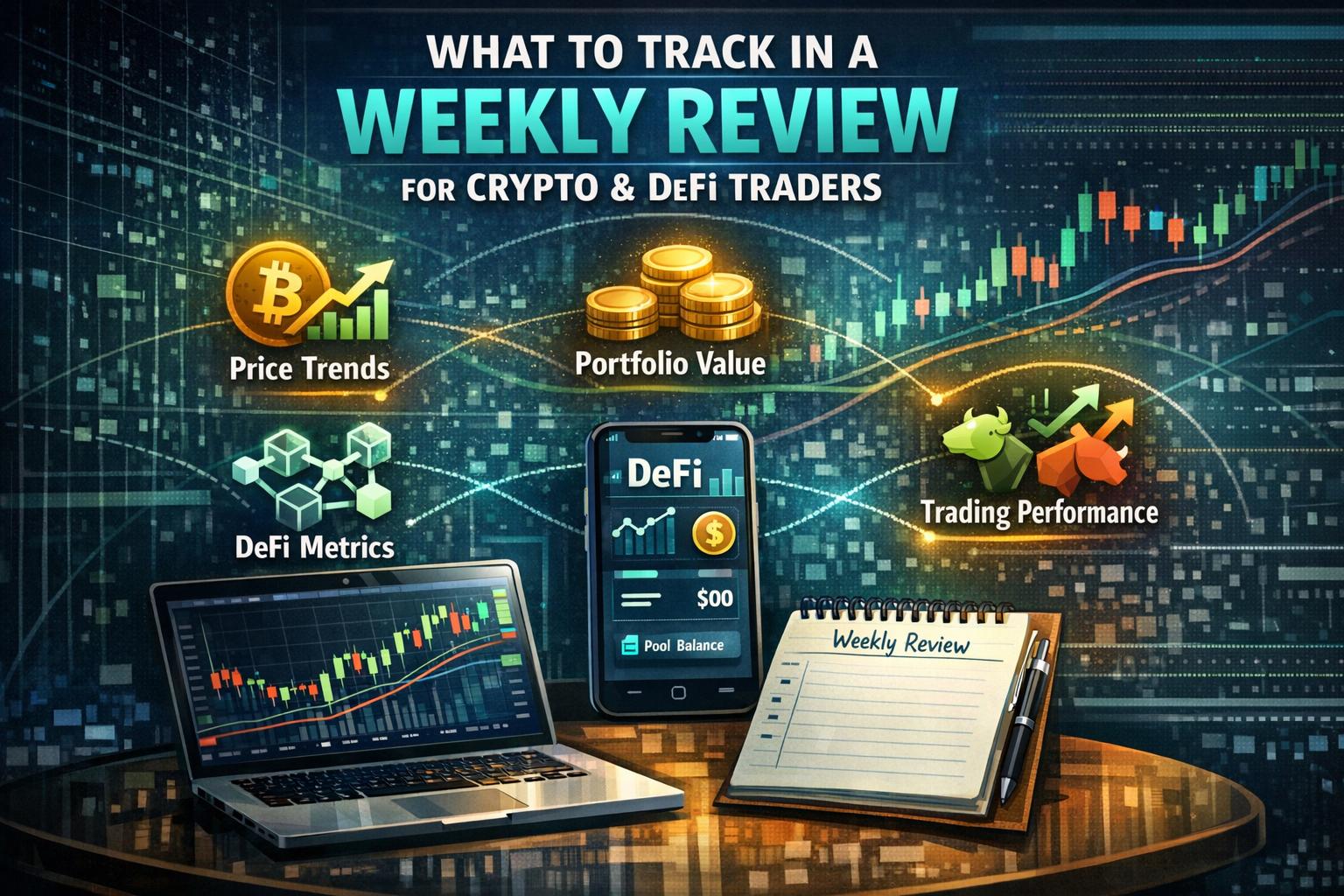
Market Performance
Monitoring the performance of the cryptocurrency market requires a structured and consistent approach. The digital asset ecosystem operates continuously, without the trading hour limitations of traditional financial markets. As a result, price movements can occur at any time, influenced by liquidity shifts, macroeconomic developments, institutional participation, and changes in investor sentiment. A systematic weekly review helps traders interpret these developments within a broader strategic framework.
One of the primary indicators of overall market health is total market capitalization. This metric reflects the combined value of all digital assets and offers insight into the scale and maturity of the market. An expanding market capitalization may signal increasing participation or capital inflows, while a contraction can suggest decreased investor confidence or broader risk aversion. However, market capitalization alone does not provide sufficient context. It should be evaluated alongside trading volume to understand the strength of price movements.
Trading volume reveals the level of activity surrounding a particular asset or the market as a whole. A price increase accompanied by rising volume often indicates strong conviction among participants. Conversely, significant price movement without corresponding volume may reflect temporary volatility rather than sustained momentum. Analyzing volume patterns across different exchanges also helps identify whether movement is widespread or concentrated.
Price trends of major cryptocurrencies such as Bitcoin and Ethereum serve as reference points for the broader market. Bitcoin frequently acts as a benchmark, with many altcoins demonstrating correlation to its movement. Ethereum’s performance can also signal shifts in decentralized finance and smart contract usage. Observing whether altcoins are outperforming or underperforming primary assets can provide clues about market cycles, including periods of accumulation, expansion, or consolidation.
Market sentiment is another factor that warrants attention. Although sentiment can be difficult to quantify directly, proxies such as funding rates, open interest in derivatives markets, and volatility indices provide measurable indicators. Excessively positive sentiment may suggest overextension, while pronounced pessimism might correspond with oversold conditions. Integrating sentiment evaluation with quantitative metrics produces a more balanced interpretation of conditions.
Modern traders often rely on chart analysis and technical indicators to interpret historical price action. Charts display patterns that can highlight recurring behaviors in market psychology. By identifying support and resistance levels, trendlines, and areas of consolidation, traders can assess the probability of continuation or reversal. Technical indicators complement price action by offering mathematical interpretations of momentum, volatility, and trend strength.
A structured weekly review of market performance should also include correlation analysis. Digital assets do not move in isolation; correlations with equity markets, commodities, and macroeconomic factors frequently shape trends. For example, shifts in interest rate expectations can alter investor appetite for speculative assets, including cryptocurrencies. Evaluating these cross-market influences broadens the analytical framework.
In addition, liquidity depth and order book analysis contribute to understanding market resilience. Thin order books can amplify price volatility, while deeper liquidity buffers price fluctuations. Examining these structural characteristics assists traders in identifying potential slippage and transaction cost considerations.
In summary, evaluating market performance involves more than reviewing price changes. It requires integrating capitalization, volume, sentiment, liquidity, macroeconomic context, and technical structure into a coherent assessment. A disciplined weekly approach reduces reactive decision-making and promotes data-driven strategy adjustments.
Portfolio Assessment
A weekly portfolio assessment provides clarity regarding the effectiveness of trading decisions and capital allocation. Without consistent evaluation, performance attribution becomes difficult, and risk exposure may increase unintentionally. Reviewing portfolio metrics regularly allows traders to maintain alignment between strategy and outcomes.
The first step in portfolio assessment involves calculating total portfolio value and comparing it with the previous evaluation period. This comparison reveals absolute gains or losses, but a deeper analysis is necessary to understand underlying drivers. Traders should separate realized profits from unrealized changes to distinguish between closed positions and ongoing exposure.
Asset allocation plays a central role in portfolio performance. A diversified allocation across multiple cryptocurrencies can reduce exposure to idiosyncratic risk associated with a single project. However, diversification must be purposeful rather than random. Assets should be selected based on differentiated utility, market capitalization tiers, and correlation characteristics. A weekly review highlights whether allocation remains consistent with intended risk tolerance.
Performance attribution analysis identifies which assets contributed positively or negatively to results. For instance, a portfolio might exhibit overall growth while certain holdings underperform the broader market. Determining whether underperformance stems from broader market trends or asset-specific issues informs whether rebalancing is appropriate.
Risk-adjusted metrics enhance evaluation quality. Rather than focusing solely on returns, traders may assess volatility, drawdown levels, and Sharpe-like ratios adapted for digital assets. High returns accompanied by substantial volatility may not align with conservative strategies. A structured approach ensures that performance evaluation remains consistent with objectives.
Liquidity considerations should also be examined. Some digital assets may have limited trading volume, leading to higher execution costs. If liquidity conditions change significantly, the feasibility of entering or exiting positions may be affected. Regular assessment ensures that portfolio composition does not inadvertently introduce constraints.
Rebalancing decisions form a key outcome of weekly assessments. If one asset’s weight increases disproportionately due to appreciation, portfolio risk concentration may rise. Gradual rebalancing can maintain desired allocation ratios without excessive transaction costs. Conversely, significant underperformance may prompt reduction or reallocation depending on fundamental and technical evaluation.
Tax considerations may also influence portfolio adjustments. In certain jurisdictions, realized gains trigger tax obligations, affecting net returns. Awareness of these implications supports informed decision-making regarding trade timing and position sizing.
A comprehensive portfolio assessment process therefore encompasses valuation comparison, allocation review, asset-specific analysis, risk-adjusted performance measurement, liquidity evaluation, and rebalancing strategy. Conducted consistently, this process strengthens accountability and promotes continuous improvement in trading discipline.
Risk Management
Risk management is a foundational component of sustainable trading. Digital asset markets are characterized by elevated volatility, leverage availability, and 24-hour trading cycles. Without clearly defined safeguards, exposure can escalate quickly.
One element of risk management involves controlling position size. Allocating excessive capital to a single position can lead to disproportionate losses. Position sizing strategies often rely on percentage-based models, ensuring that no single trade threatens overall portfolio stability. This discipline preserves capital during unfavorable conditions.
Stop-loss orders represent another mechanism for limiting downside exposure. By predefining an exit level, traders reduce the impact of emotional decision-making. However, stop placement should reflect volatility conditions to avoid premature execution. Weekly review of existing stop-loss levels ensures they remain aligned with current technical structures.
Diversification reduces concentration risk by distributing exposure across assets with varying characteristics. While correlations may increase during extreme market conditions, thoughtful diversification generally mitigates isolated adverse events. Reviewing diversification metrics weekly helps maintain balanced exposure.
Evaluating the risk exposure of open positions requires examination of leverage usage, margin requirements, and counterparty risk. Leveraged positions amplify both gains and losses. Monitoring margin levels prevents forced liquidation scenarios and protects capital integrity.
Risk-reward ratios guide entry decisions by comparing potential profit to potential loss. Trades with unfavorable ratios may undermine long-term performance even if occasional gains occur. A weekly review of active setups ensures that average risk-reward metrics remain consistent with strategic objectives.
Scenario analysis strengthens risk preparedness. Considering hypothetical market downturns or volatility spikes clarifies the potential impact on portfolio value. Stress testing exposure under various scenarios improves resilience planning.
Incorporating clear risk parameters into every trade and reviewing them systematically reduces impulsive behavior. Effective risk management does not eliminate losses but constrains their magnitude and frequency. Over time, disciplined risk control supports more stable outcomes and preserves the capacity to capitalize on favorable opportunities.
Technical Analysis Review
A structured technical analysis review enhances the objectivity of trading decisions. By examining recurring price behaviors and statistical indicators, traders can develop systematic entry and exit criteria.
Weekly analysis of charts typically begins with higher time frames to establish broader trends. Identifying whether an asset remains in an uptrend, downtrend, or consolidation phase provides contextual alignment for shorter-term strategies. Multi-timeframe analysis reduces conflicting signals.
Trend identification often relies on moving averages. Shorter-period averages track recent momentum, while longer-period averages reflect broader direction. Crossovers between these averages may indicate potential shifts in trend. However, crossovers should be evaluated alongside volume and price structure to confirm reliability.
Momentum indicators such as the Relative Strength Index help assess overbought or oversold conditions. Extreme readings may suggest potential reversals, though sustained trends can maintain elevated or depressed levels. Interpreting RSI in relation to overall trend direction refines its application.
The MACD indicator combines trend and momentum evaluation by measuring the convergence and divergence of moving averages. Observing histogram expansion or contraction can reveal accelerating or weakening momentum. Weekly analysis of MACD across major assets supports broader sentiment assessment.
Recognition of patterns such as triangles, channels, and head-and-shoulders formations contributes to forecasting potential breakout or breakdown scenarios. Confirmation through increased volume enhances validity. Pattern reliability improves when multiple technical signals align.
Support and resistance levels serve as reference zones for entry and exit planning. Historical reaction points often attract renewed buying or selling interest. Updating these levels weekly ensures relevance as price structures evolve.
Backtesting strategies using historical data enhances confidence in technical approaches. By analyzing past signals and outcomes, traders can identify patterns with higher probability characteristics. Continuous refinement supports adaptive performance in changing market environments.
Overall, technical analysis review functions as a decision-support mechanism. It translates historical data into actionable structure while maintaining awareness that no indicator guarantees future performance.
News and Regulatory Updates
Digital asset markets respond rapidly to information flow. Technological developments, macroeconomic data releases, institutional adoption, and regulatory announcements can influence price dynamics. Regular monitoring of reliable sources supports informed adaptation.
Regulatory clarity plays a significant role in shaping market participation. Changes in compliance requirements, taxation policies, or trading restrictions can affect liquidity and institutional involvement. Monitoring government regulations provides insight into evolving frameworks that may influence asset valuations.
Technological advancements, such as protocol upgrades or scalability improvements, alter fundamental value propositions. Ethereum network upgrades, for example, can impact transaction efficiency and investor perception. Awareness of development milestones informs both short-term trading and long-term positioning.
Partnership announcements, exchange listings, and integration with mainstream financial services can expand user adoption. Conversely, security breaches or litigation may introduce uncertainty. Evaluating the credibility and impact scope of each event prevents overreaction.
Macroeconomic developments also intersect with cryptocurrency performance. Inflation data, central bank policies, and geopolitical tensions influence investor risk appetite. Incorporating these broader considerations supports comprehensive situational awareness.
Maintaining a structured weekly process for reviewing news reduces susceptibility to rumor-driven volatility. Distinguishing between substantive developments and speculative commentary promotes disciplined decision-making.
In conclusion, effective cryptocurrency trading entails integrating market performance analysis, portfolio assessment, risk management, technical evaluation, and awareness of news and regulatory updates. Through consistent review and structured methodology, traders enhance their capacity to adapt to dynamic conditions while maintaining strategic coherence.