
Identifying Potential Cryptocurrencies and DeFi Projects
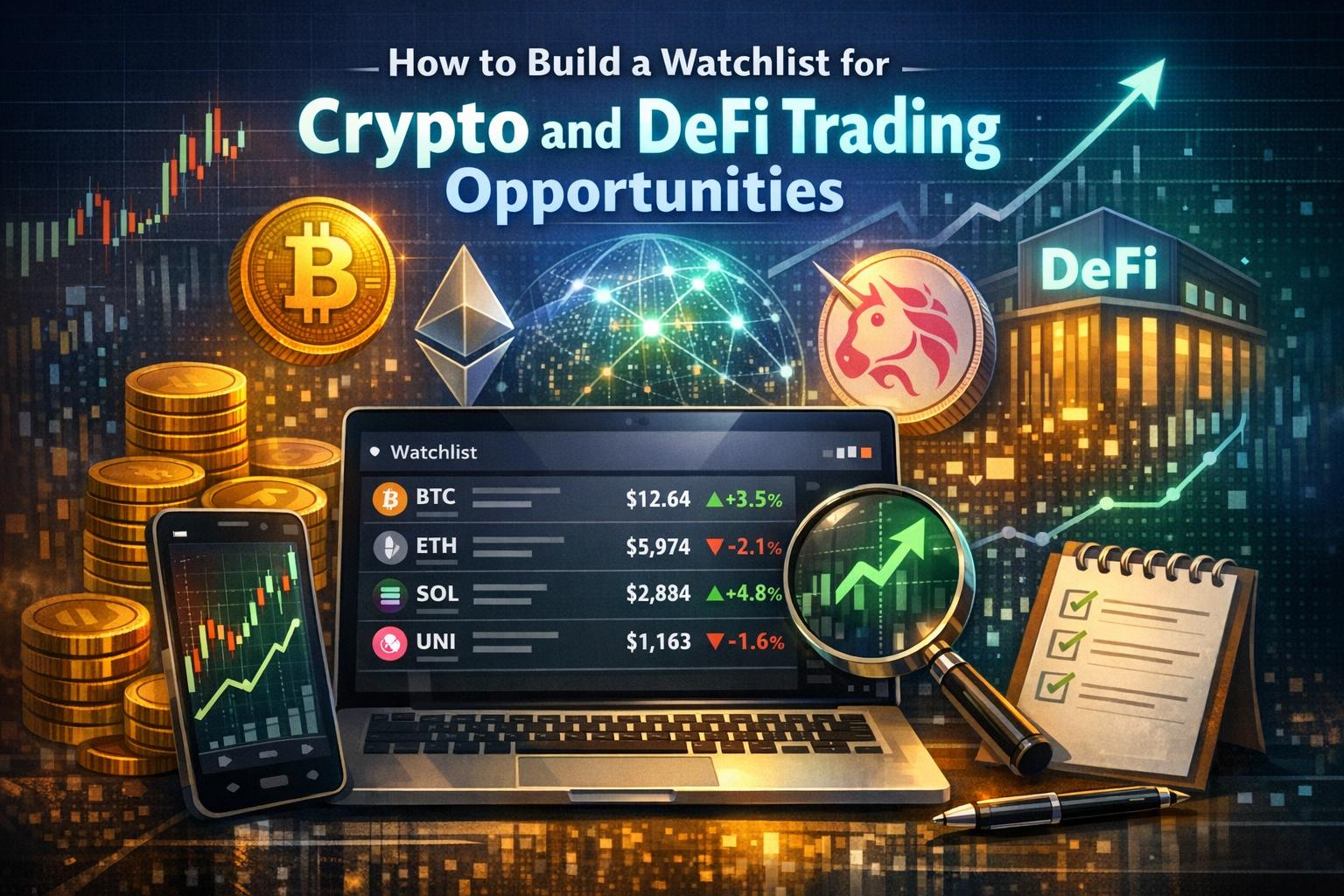
Building a structured watchlist for cryptocurrency and decentralized finance opportunities begins with systematic research. The digital asset market includes thousands of tokens, protocols, and blockchain networks, each with varying degrees of maturity, innovation, and risk. Without a methodical approach, it is difficult to separate fundamentally strong projects from short-term speculative assets. A well-developed watchlist serves as an organized framework for monitoring assets that align with specific trading or investment criteria.
The first stage involves surveying both established cryptocurrencies and emerging DeFi projects. Established assets such as major layer-one blockchains often provide historical data, liquidity, and broad exchange availability. Emerging projects, by contrast, may offer higher potential growth but typically involve less predictable performance and higher risk. Including a combination of both categories allows for diversified monitoring.
Data aggregators such as CoinMarketCap and CoinGecko provide structured overviews of cryptocurrencies ranked by market capitalization, trading volume, and other metrics. These platforms display supply figures, historical price data, exchange listings, token distribution, and related project information. Reviewing this information helps filter assets before deeper analysis. Rather than adding large numbers of tokens to a watchlist, it is more effective to narrow the selection using consistent criteria such as technology relevance, liquidity, sector classification, and development activity.
It is also useful to categorize projects by sector. For example, assets can be grouped into layer-one blockchains, layer-two scaling solutions, decentralized exchanges, lending protocols, real-world asset tokenization, gaming, or infrastructure tools. Categorization clarifies exposure across different segments of the ecosystem and reduces concentration in a single narrative or trend.
Evaluating Market Capitalization and Trading Volume
Market capitalization remains one of the most widely referenced metrics in cryptocurrency analysis. It is calculated by multiplying the current token price by the circulating supply. Larger-cap assets typically demonstrate greater market stability, broader exchange support, and more institutional participation. Smaller-cap assets may exhibit increased volatility but can offer substantial percentage gains under favorable conditions.
However, market capitalization should not be interpreted in isolation. Circulating supply, total supply, and fully diluted valuation all influence token economics. A project with a low circulating supply but a large future token release schedule may face dilution risk. Tracking upcoming token unlocks and emission schedules provides a more complete understanding of supply dynamics.
Trading volume reflects how frequently and efficiently an asset is exchanged in the market. Consistent and adequate volume is essential for liquidity. Liquidity determines how easily positions can be opened or closed without significantly affecting price. Assets with low liquidity may experience large price swings due to relatively small transactions. For traders who rely on technical entry and exit points, sufficient daily volume allows for smoother execution.
Volume trends also offer insight into shifts in market participation. Rising prices accompanied by increasing volume often indicate sustained participation, while declining volume during price increases may signal weakening momentum. Monitoring both spot and derivatives volume can provide a broader perspective on speculative positioning and hedging behavior.
Beyond raw numbers, comparing an asset’s market cap relative to competitors in the same sector can reveal valuation discrepancies. For example, two decentralized exchange tokens with similar user activity but significantly different valuations may warrant closer examination to understand the gap.
Analyzing Technology and Use Cases
The underlying technology of a cryptocurrency or DeFi protocol is central to its long-term viability. Technical assessments begin with understanding the blockchain architecture or smart contract framework. Consider whether the project operates as a standalone blockchain, a layer-two scaling solution, or a token built on an existing network. Each structure carries different trade-offs in terms of scalability, decentralization, security, and interoperability.
Consensus mechanisms influence network security and economic incentives. Proof-of-work, proof-of-stake, delegated proof-of-stake, and hybrid systems distribute responsibilities differently among participants. Evaluating how validators are selected and rewarded can reveal potential centralization risks or economic imbalances.
Smart contract platforms should be evaluated for developer activity and ecosystem growth. An active developer community often indicates ongoing improvements and adaptation to market needs. Public repositories, protocol upgrades, and improvement proposals help measure development momentum. A stagnating codebase may indicate declining commitment or limited innovation.
Equally important are the use cases the project addresses. Tokens that serve purely speculative purposes tend to depend heavily on market sentiment. In contrast, projects that facilitate decentralized lending, payments, cross-border transfers, derivatives trading, identity verification, or asset tokenization may have more defined functional roles. Assess whether the protocol addresses inefficiencies in traditional finance or improves accessibility, transparency, or transaction speed.
In DeFi specifically, evaluating total value locked (TVL), user adoption, and fee generation provides insight into real-world utilization. TVL indicates the amount of capital committed to the protocol, although it should be interpreted alongside token incentives that may temporarily inflate participation. Fee revenue and sustainable incentive models are often more reliable indicators of durability.
Security practices also require examination. Audits conducted by reputable firms, bug bounty programs, and transparent incident reporting contribute to resilience. Given the frequency of smart contract vulnerabilities, security architecture is not a secondary consideration but a foundational requirement.
Study the Team and Partnerships
The background of a project’s team frequently influences execution quality. While some cryptocurrency founders operate pseudonymously, identifiable leadership with verifiable experience in software development, cryptography, finance, or entrepreneurship adds measurable credibility. Prior involvement in successful projects or contributions to established blockchain ecosystems may demonstrate competence.
Reviewing public interviews, conference presentations, and technical documentation can clarify whether leadership articulates coherent development roadmaps and measurable objectives. Transparent communication regarding upgrades, partnerships, and governance proposals reflects organizational maturity.
Partnerships can provide additional validation, particularly when they involve established technology firms, financial institutions, infrastructure providers, or academic organizations. Strategic alliances may enhance distribution, regulatory alignment, or integration into broader ecosystems. However, it is important to distinguish between operational partnerships and symbolic marketing announcements. Confirming the practical function of partnerships strengthens analysis.
Governance structures also warrant attention. Decentralized autonomous organizations (DAOs) distribute decision-making through token voting. Reviewing governance participation rates and proposal quality helps determine whether token holders actively guide development or whether decision-making remains concentrated among a small subset of participants.
Assess Community Engagement and Social Sentiment
A project’s community reflects both adoption and long-term viability. Digital asset communities often coordinate development discussions, protocol governance, technical support, and promotional outreach. Observing activity levels across platforms such as Twitter, Telegram, and Discord provides insights into engagement.
Quantitative metrics such as follower growth, comment frequency, and discussion consistency may indicate sustained interest. However, raw follower counts alone can be misleading due to automated accounts or marketing campaigns. Evaluating the substance of discussions is more informative. Communities that provide technical analysis, development feedback, and governance participation reflect deeper engagement than channels limited to price speculation.
Social sentiment analysis tools aggregate data to identify trends in positive or negative commentary. While sentiment can shift rapidly, sustained changes may correlate with major announcements, upgrades, or security events. Tracking sentiment alongside price action helps contextualize volatility.
Community resilience during market downturns also signals durability. Projects that retain developer engagement and user participation under less favorable conditions often possess stronger foundational value.
Using Analytical Tools to Monitor Opportunities
After identifying potential assets, structured monitoring becomes essential. Analytical platforms enable traders and investors to observe price performance, technical indicators, and macro correlations. Tools such as TradingView allow for customizable chart layouts that incorporate moving averages, oscillators, support and resistance levels, and volume indicators.
Technical analysis provides additional context beyond fundamental research. Identifying recurring patterns, volatility compression, breakout levels, and long-term trend lines can assist in timing entries or exits. Although technical tools do not predict future prices with certainty, they provide structured frameworks for interpreting historical market behavior.
Portfolio tracking tools centralize asset performance across exchanges and wallets. Monitoring allocation percentages helps maintain balanced exposure and prevents unintentional concentration in a single asset or sector. Automated dashboards can display daily percentage changes, realized gains, unrealized positions, and transaction history.
News aggregation platforms streamline information flow by collecting updates from multiple sources. Protocol upgrades, regulatory announcements, network outages, or security breaches often influence short-term price movements. Staying informed allows for timely adjustments to the watchlist.
On-chain analytics platforms provide deeper insights into blockchain activity. Metrics such as active addresses, transaction counts, validator participation, staking rates, and token transfer volumes offer real-time evidence of network usage. For DeFi protocols, examining liquidity pool balances and borrowing activity adds an additional layer of evaluation.
Setting Up Alert Systems
Automated alert systems improve efficiency by reducing the need for constant monitoring. Most exchanges and analytical platforms allow users to set price alerts at predefined thresholds. Alerts can be configured for percentage changes, support and resistance breaches, or moving average crossovers.
Volume-based alerts help detect unusual activity that precedes significant price fluctuations. Sudden increases in trading volume may signal emerging interest or large institutional transactions. Similarly, alerts for market capitalization movements highlight shifts in relative ranking among peers.
News-based notifications can also be customized to follow specific assets or keywords. Immediate awareness of exchange listings, regulatory updates, or major partnerships allows for prompt reassessment of positions.
Combining multiple alert categories creates a layered monitoring system. For example, receiving simultaneous alerts for both price breakout and volume increase may prompt closer chart analysis. Automation reduces missed opportunities and enhances disciplined decision-making.
Revising and Updating Your Watchlist Regularly
A cryptocurrency watchlist is a dynamic tool rather than a static collection. Market conditions change rapidly due to technological evolution, macroeconomic developments, and regulatory shifts. Periodic reassessment ensures that the watchlist remains aligned with current objectives and risk tolerance.
Scheduled reviews may include quarterly fundamental evaluations alongside more frequent technical updates. During these reviews, reassess tokenomics, development progress, governance activity, and ecosystem growth. Assets that show declining usage or repeated security issues may warrant removal.
Emerging narratives such as scaling innovations, real-world asset tokenization, artificial intelligence integration, or cross-chain interoperability may introduce new candidates. Staying informed about sector-wide developments supports timely additions to the watchlist.
Performance measurement also contributes to refinement. Comparing projected criteria against actual outcomes improves analytical precision. If certain metrics consistently correlate with strong performance, weighting those metrics more heavily in future evaluations can improve selection processes.
Risk management considerations should influence revisions as well. Diversifying across sectors and market capitalizations reduces reliance on a single macro theme. Rebalancing allocations in response to volatility preserves capital and prepares the watchlist for new opportunities.
Maintaining detailed notes for each asset adds structure to revisions. Documenting initial investment theses, risk factors, and target milestones facilitates objective reassessment. When market behavior diverges from expectations, reviewing original assumptions helps clarify whether conditions have changed or whether earlier analysis was incomplete.
Conclusion
Developing and maintaining a watchlist for cryptocurrency and DeFi trading opportunities requires consistent research, technological assessment, liquidity analysis, and structured monitoring. Evaluating market capitalization, trading volume, token economics, and on-chain data provides measurable insights into asset stability and growth potential. Understanding technological foundations and governance structures strengthens long-term evaluation.
Integrating analytical platforms, automated alerts, and periodic reviews transforms a watchlist from a simple record into a structured decision-support system. By combining quantitative metrics with qualitative assessments such as community engagement and development activity, traders and investors can create a disciplined framework for navigating the evolving digital asset landscape.